
I've had anxiety for most of my adult life.
Not the kind that stops you functioning. The kind that sits underneath everything. A low-level hum that shows up without reason, that doesn’t match your circumstances. For over 20 years, I managed it. Got better at coping.
Then I looked at my own genetics.
For the first time, I had a biological explanation for something I had been treating as a psychological problem. That changed everything about how I approach mental health — mine, and the hundreds of clients I’ve worked with since.
Why anxiety and depression rates keep rising despite record mental health investment
Australia has one of the most well-funded mental health systems in the world. We run awareness campaigns. We train workplaces. We’ve built entire movements around breaking stigma and encouraging people to speak up.
And the rates of anxiety and depression are still rising.
That contradiction is worth sitting with. Because the response to rising rates has largely been more of the same — more awareness, more access, more conversation. All of it valuable. None of it sufficient.
After five years of running genetic reports and seeing the same patterns repeat across client after client, I keep coming back to the same question.
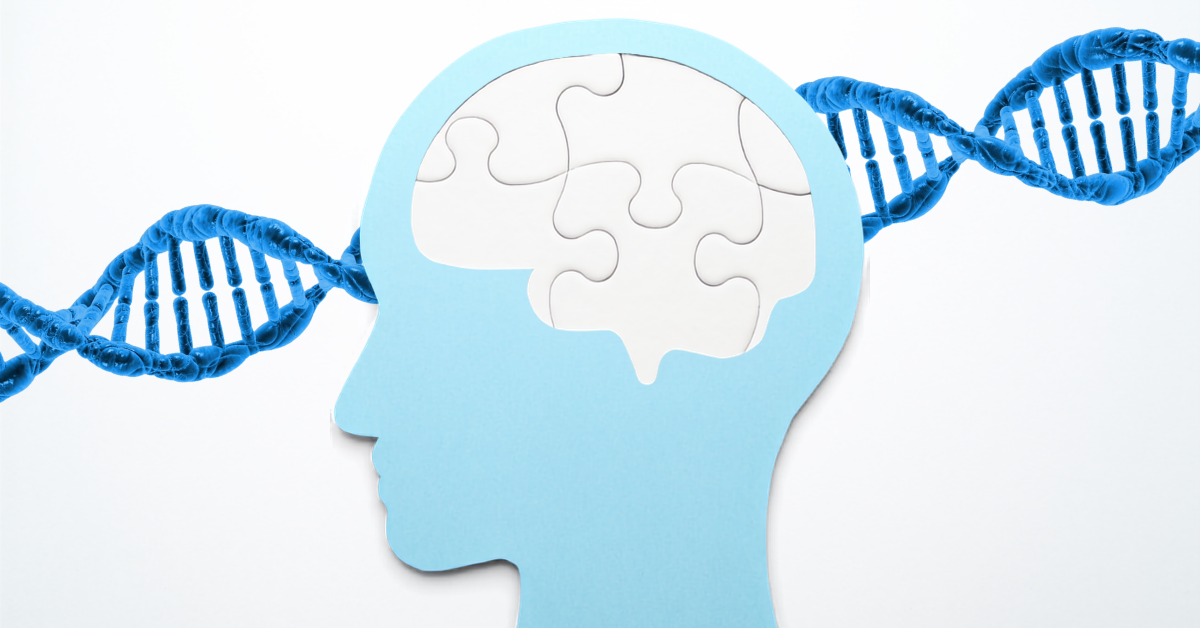
What if biology is half the picture we’re not looking at?

Let's take a closer look at what MTHFR gene does to your mental health
MTHFR stands for methylenetetrahydrofolate reductase. It’s an enzyme-producing gene that controls one of the most important processes in human biochemistry: the conversion of folate into its active, usable form.
That conversion matters enormously for mental health. Here’s why.
Active folate is required to produce the neurotransmitters that regulate mood, focus and emotional regulation — serotonin, dopamine and norepinephrine. When the MTHFR gene has a variant, that conversion slows or stalls. Neurotransmitter production drops. Homocysteine levels rise, creating low-grade neurological inflammation.
Each copy of the C677T variant reduces MTHFR enzyme efficiency by approximately 35%. People who carry two copies — known as a double mutation — have around 30% of normal enzyme activity. Genetic Lifehacks
A meta-analysis of 81 published studies found that the MTHFR C677T variant is significantly associated with both schizophrenia and major depression across the overall population. Frontiers
This variant is carried by approximately 40% of the population. Most will never be tested for it. Most mental health assessments will never ask about it.
The COMT gene: why some people can't switch off stress
MTHFR is not the only gene affecting mental health outcomes. The COMT gene — catechol-O-methyltransferase — is equally important and equally overlooked.
COMT controls the rate at which stress hormones, including cortisol and adrenaline, clear the prefrontal cortex after a stressful event. Fast COMT variants clear these hormones quickly. Slow COMT variants mean they linger — sometimes for hours after the trigger has passed.
For someone with a slow COMT variant, the nervous system stays elevated long after the situation has resolved. They aren’t overreacting. Their biology is processing at a different metabolic rate. Managing stress better will help. It won’t change the underlying clearance rate.
This distinction matters enormously when someone has tried therapy, breathwork, lifestyle changes, and still can’t understand why they can’t wind down.
What five years of genetic reports show
The clients I work with are not in crisis. They are self-aware, motivated people who have often done significant work on themselves. Therapy. Lifestyle adjustments. Sometimes medication. Things improve. Then drift. They stay stuck at the same baseline.
When I look at the genetics, I find biological mechanisms that nobody has examined. MTHFR variants reducing neurotransmitter production at source. COMT variants keeping the stress response running hot. Detoxification pathways running slow, allowing inflammatory compounds to accumulate and affect brain function.
Every time I ask a client whether they experience anxiety-like or depression-like symptoms, the answer is almost always yes.
These are not rare findings. They are common patterns. And they have been sitting unexamined in the DNA of people seeking mental health support for years.
The statistics that should be changing this conversation
Suicide is the leading cause of death for Australians aged 15 to 44. Over three quarters of those deaths are male. Centre for Population
Just let that sit for a moment.
Fifty to sixty percent of people who die by suicide do so without ever receiving formal mental health care or treatment. The instinctive response is to ask why they didn’t speak up. But speaking up, on its own, cannot fix a biological pattern nobody has identified.
If your neurotransmitter production is compromised at a genetic level, a conversation does not restore it. If your stress hormone clearance is slow by metabolic design, a breathing exercise does not change the rate. These interventions help. They are not the complete answer.
In December 2025, Harvard researchers identified five genetic signatures shared across 14 different psychiatric disorders. Their conclusion was direct: things the mental health sector is currently giving different names to may actually be driven by the same biological processes.
The science is pointing somewhere clear. The clinical conversation has not followed.
Is your anxiety or depression biological? What to look for
This is the question most people reading this actually want answered. Here are the patterns that consistently appear in genetic reports alongside anxiety and depression:
MTHFR C677T or A1298C variants — reduced neurotransmitter production, elevated homocysteine, impaired methylation. Often presents as anxiety that doesn’t match circumstances, low mood that resists lifestyle interventions, fatigue that isn’t explained by sleep.
Slow COMT variants — stress hormones that stay active long after the trigger. Often presents as an inability to wind down, rumination, hypersensitivity to stressors, elevated baseline tension.
MAO-A variants — affects breakdown of serotonin, dopamine and norepinephrine. Can contribute to mood instability and anxiety.
BDNF variants — brain-derived neurotrophic factor affects neuroplasticity and the brain’s ability to adapt and recover. Low BDNF function is associated with both depression and reduced response to antidepressant treatment.
None of these are diagnoses. They are biological patterns that, when identified, change what you prioritise and how you intervene.
What a more complete mental health approach looks like
Genetic and epigenetic assessment does not replace therapy, medication, or mental health support. It adds the layer that explains why those interventions may be working partially — or not at all.
When the biological picture is clear, the intervention becomes specific. Methylated B vitamins for MTHFR variants. Targeted support for COMT-driven stress hormone clearance. Inflammation reduction for elevated homocysteine. These are not vague wellness suggestions. They are evidence-based, targeted responses to a measured problem.
I carry several of these variants myself. The anxiety I managed for over 20 years had a biological explanation I didn’t know existed until I looked. Once I understood it, I could actually work with it — not just around it.
Next week I’m presenting this at the International Mental Health Conference on the Gold Coast hosted by the Australian and New Zealand Mental Health Association. This is the conversation I believe the mental health sector needs to be having.
Frequently Asked Questions
Can MTHFR cause anxiety and depression?
MTHFR variants don’t cause anxiety or depression directly, but they create biological conditions that make both more likely and harder to treat. By reducing neurotransmitter production and elevating homocysteine, MTHFR variants disrupt the biochemistry that mood regulation depends on. Multiple meta-analyses across hundreds of published studies have confirmed the association.
How do I know if my mental health issues are genetic?
Standard blood tests and mental health assessments do not test for gene variants. A comprehensive DNA Test — distinct from ancestry testing — looks at specific variants in genes like MTHFR, COMT, BDNF and MAO-A that affect brain chemistry, stress response and mood regulation.
Can you fix MTHFR naturally?
You cannot change the gene variant, but you can absolutely help to support it! Methylated B vitamins, particularly methylfolate and methylcobalamin, bypass the conversion step that MTHFR disrupts. Targeted supplementation, dietary changes and reduced toxic load can meaningfully improve methylation function and neurotransmitter production.
Why don't doctors test for MTHFR?
Awareness and training in genetics among mental health and general practitioners remains low. MTHFR testing is not part of standard mental health assessment protocols in Australia. Functional health practitioners and genetic health specialists are more likely to include it.
Is this relevant for men?
Yes. Men are less likely to seek mental health support and more likely to describe their struggles through physical symptoms — fatigue, irritability, disrupted sleep — rather than emotional ones. COMT and MTHFR variants affect men and women differently due to interactions with hormone metabolism. Men with slow COMT variants in particular often experience elevated baseline stress that doesn’t respond to conventional management approaches.
If this connects with where you are
Most people who come to me have already done the work. The therapy. The lifestyle changes. The blood tests that came back normal. And they’re still not where they want to be.
What we almost always find is that the answer was upstream.
If you want to understand what your genetics are actually doing — not just what they predict, but how your biology is performing right now — the place to start is a conversation. I work with a small number of clients each month on a one-to-one basis. No obligation. Just a clear picture of whether what I do is the right fit for where you are.
→Book a discovery call with Chris
Or if you’re earlier in the process, our SKOOL community is where I share the thinking behind the work, free to join.
Chris Barnes is a Genetic and Epigenetic Health Strategist and Keynote Speaker. Over five years and hundreds of genetic reports, he has developed a methodology that treats mental, physical and metabolic health as a connected biological system — because it always is.
This article is educational in nature and does not constitute medical advice.



0 Comments